
Hospital Coding Services for Accurate Documentation and Revenue Cycle Excellence
Hospital coding services are a core element of healthcare operations that directly influence billing accuracy, compliance, and financial performance. Hospitals manage a wide range of patient encounters across inpatient, outpatient, emergency, and surgical departments, making it essential to maintain a structured approach to documentation and coding. Accurate coding ensures that every diagnosis, treatment, and procedure is properly translated into standardized codes, enabling efficient claim submission and timely reimbursement. A well-established coding framework minimizes errors, reduces claim denials, and supports consistent revenue flow, allowing healthcare organizations to maintain operational stability.
Understanding Hospital Coding in Healthcare Systems
Hospital coding is the process of converting clinical documentation into standardized medical codes used for billing and reporting. These codes represent diagnoses, procedures, and services provided during patient care and are essential for communication between healthcare providers and insurance payers.
Accurate hospital coding ensures that all services are captured correctly and billed in alignment with payer requirements. It improves claim acceptance rates and supports faster reimbursement cycles. In addition, reliable coding contributes to accurate healthcare data, which is critical for performance monitoring, quality improvement, and strategic decision-making.
Role of Hospital Coding Specialist in Clinical Accuracy
A hospital coding specialist plays a key role in maintaining the accuracy and integrity of medical records. These professionals review patient documentation and assign appropriate codes based on clinical information and coding guidelines.
They analyze physician notes, diagnostic reports, laboratory results, and discharge summaries to ensure that all relevant details are accurately captured. When documentation is incomplete or unclear, coding specialists collaborate with healthcare providers to obtain clarification.
Their expertise reduces coding errors, improves claim quality, and ensures compliance with regulatory standards. This contributes to efficient billing processes and improved financial outcomes.
Importance of Coding Services in Revenue Cycle Management
Coding services are an essential part of the healthcare revenue cycle, directly impacting claim submission and reimbursement processes. Accurate coding ensures that claims are processed efficiently without delays or rejections.
Errors in coding can lead to denied claims, payment delays, and revenue loss. Efficient coding services help prevent these issues by ensuring that claims are complete and accurate before submission. This improves cash flow and reduces administrative workload.
Hospitals that implement structured coding services can achieve consistent financial performance and operational efficiency.
Benefits of Healthcare Coding Services
Healthcare coding services provide hospitals with access to experienced professionals and standardized workflows that enhance accuracy and efficiency. These services help manage large volumes of patient data while maintaining compliance with industry standards.
Outsourcing coding functions allows healthcare providers to focus on patient care while reducing administrative responsibilities. Coding professionals ensure consistency across departments, minimizing errors and improving billing accuracy.
Healthcare coding services also support audit readiness and reduce compliance risks, making them an essential resource for healthcare organizations.
Medical Coding Services for Hospitals Across Departments
Medical coding services for hospitals cover a wide range of clinical areas, including inpatient care, outpatient services, emergency departments, surgical procedures, and diagnostic testing. Each department has specific coding requirements based on the type of care provided.
Professional coding teams apply appropriate guidelines to ensure that services are accurately represented across all departments. This improves reimbursement rates and supports efficient revenue cycle management.
Accurate coding across departments ensures that hospitals capture the full value of the care delivered and maintain financial stability.
Coding Services for Hospitals in a Digital Healthcare Environment
The adoption of electronic health record systems has transformed hospital operations by enabling structured documentation and easy access to patient information. These systems improve coordination between clinical and administrative teams.
Coding services for hospitals integrate with digital platforms to streamline workflows and reduce manual errors. Advanced tools can identify missing documentation and detect potential coding issues before claims are submitted.
While technology enhances efficiency, skilled coding professionals remain essential for interpreting complex clinical data and ensuring coding accuracy.
Compliance and Regulatory Standards in Hospital Coding
Hospitals must adhere to strict regulatory guidelines when submitting claims. Errors in coding or incomplete documentation can result in audits, penalties, and financial risks.
Professional coding services include quality assurance processes such as regular audits and documentation reviews. These measures ensure compliance with payer requirements and industry standards.
Maintaining compliance protects healthcare organizations from legal challenges and supports long-term financial stability.
Challenges in Hospital Coding and Process Improvement
Hospital coding involves several challenges, including incomplete documentation, evolving coding standards, and the complexity of patient cases. These challenges can impact accuracy and delay reimbursement.
To overcome these issues, hospitals should invest in continuous training for coding professionals and clinical staff. Improved communication between physicians and coding teams enhances documentation quality and reduces errors.
Standardized workflows and advanced technologies further support coding accuracy and operational efficiency.
Financial Impact of Coding Services for Hospitals
Coding services for hospitals have a direct impact on financial performance by ensuring that all services are accurately captured and billed. Proper coding reduces claim denials and accelerates payment cycles.
Hospitals that maintain strong coding practices can improve revenue generation and maintain consistent cash flow. Reliable coding systems also enhance financial transparency and support better decision-making.
A well-structured coding process contributes to sustainable organizational growth.
Role of Data Analytics in Coding Performance
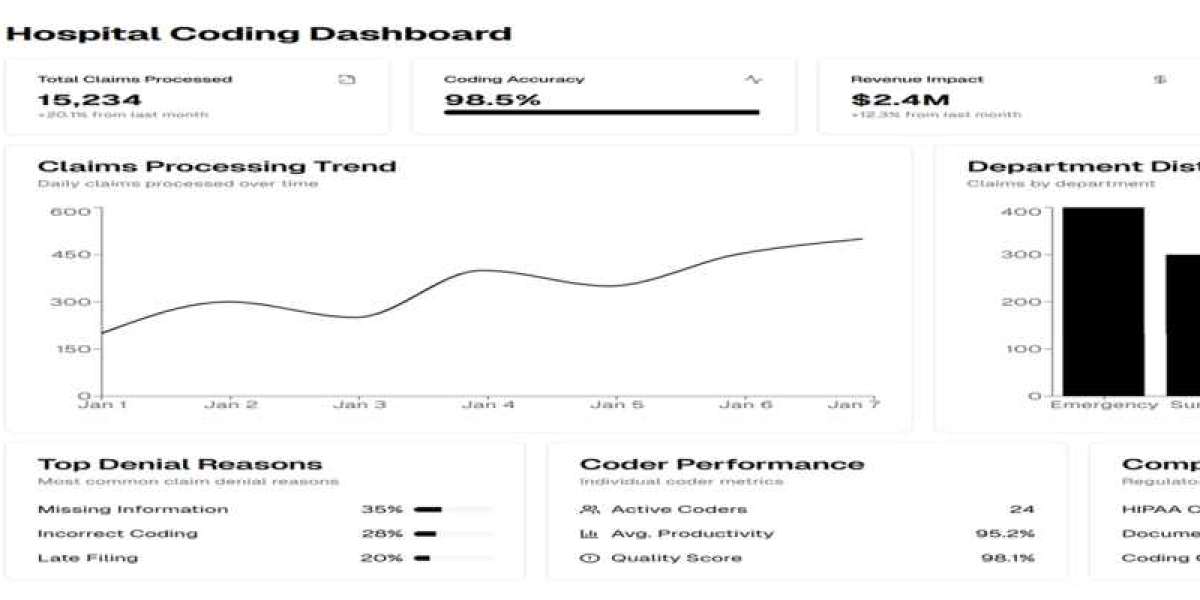
Data analytics plays an important role in improving coding accuracy and revenue cycle outcomes. Hospitals can analyze claim trends, denial rates, and coding performance to identify areas for improvement.
These insights enable administrators to optimize workflows and implement targeted strategies that enhance efficiency. Data-driven decision-making supports continuous improvement and ensures high coding standards.
Analytics also provides better visibility into financial operations, enabling informed strategic planning.
Future Trends in Hospital Coding Services
The healthcare industry continues to evolve with advancements in technology and regulatory changes. Hospital coding services are increasingly adopting automation, artificial intelligence, and predictive analytics to improve efficiency and accuracy.
These innovations assist coding professionals by analyzing documentation and suggesting appropriate codes. Automation reduces administrative workload while enhancing precision.
Future developments focus on real-time coding, improved compliance monitoring, and advanced reporting capabilities. Hospitals that adopt modern solutions will be better equipped to manage complexity and maintain financial stability.
Importance of Continuous Training and Development
Continuous training is essential for maintaining high coding standards. Coding professionals must stay updated with changing guidelines, payer policies, and industry developments.
Healthcare organizations should invest in regular training programs to improve coding accuracy and documentation quality. Collaboration between clinical and coding teams strengthens understanding and reduces errors.
Ongoing education ensures compliance and supports long-term success.
Conclusion
Hospital coding services are essential for ensuring accurate documentation, efficient billing, and regulatory compliance in healthcare organizations. Through effective hospital coding, skilled hospital coding specialists, and reliable coding services, hospitals can improve revenue cycle performance and reduce administrative challenges. Healthcare coding services and medical coding services for hospitals provide the expertise needed to manage complex requirements, while coding services for hospitals support consistent financial outcomes. By adopting advanced technology, maintaining compliance, and investing in continuous training, healthcare organizations can achieve sustainable growth and deliver high-quality patient care.