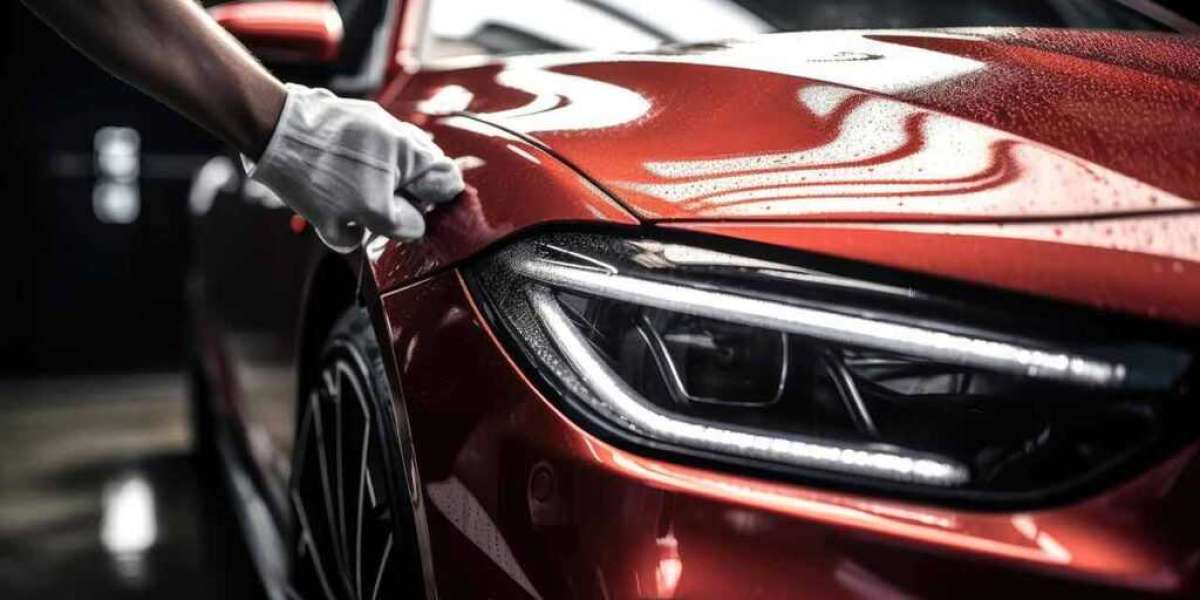

That satisfying feeling of driving away from an automatic car wash with a gleaming vehicle is deceptively expensive. While the dashboard display celebrates your "premium wash" for just $15, your paint is paying a hidden price that will appear on your balance sheet months or years later. Understanding this true cost requires looking beyond the immediate gratification to the long-term consequences for your vehicle's finish. This is where the expertise of professional car detailing reveals its value—not as an expense, but as an investment in preventing damage that cheap washes inevitably cause.
The Hidden Price Tag of Convenience
Most drivers choose automatic car washes for one simple reason: convenience. It's fast, it's easy, and it's everywhere. But that convenience comes with costs that aren't itemized on the receipt.
The $15 Illusion: A basic automatic wash seems economical at $15. But consider the cumulative effect. If you wash weekly, that's $780 annually. Over five years, you've spent nearly $4,000 on washes that may actually be damaging your paint . Compare this to a professional detail costing $250-400 twice yearly—$2,500-4,000 over five years—which actually protects and preserves your finish rather than degrading it .
The Real Math: Industry data reveals that 60% of professional paint correction work comes from damage caused by improper washing techniques and low-quality products . Those correction services typically cost $500-2,000 depending on severity . When you factor in the cost of washes plus the inevitable correction needed to fix the damage they cause, the "cheap" option becomes the most expensive path.
Understanding Swirl Marks: The Automatic Wash Signature
Swirl marks are the calling card of automatic car washes—those spider-web-like circular scratches visible under direct sunlight or bright lighting .
What Actually Causes Swirls: The brushes in automatic washes, whether cloth or foam, act like giant dirty mops slapping against your paint . Even with regular maintenance, these brushes trap grit from previous vehicles. When that grit-laden brush contacts your paint, it acts as abrasive, creating thousands of microscopic scratches with each pass . One detailing expert describes it as "essentially like slapping your car with a dirty mop, causing hundreds of deep micro scratches" .
The Cumulative Effect: Each wash adds another layer of micro-marring. Alone, a single scratch is invisible. But thousands叠加 create that hazy, dull appearance that robs your paint of depth and clarity . Over time, this damage builds until your paint becomes noticeably dull, and the scratches become easily visible .
Why Some Detailers Disagree: Interestingly, some car wash operators argue that automatic washes don't cause swirls—that swirls form naturally from environmental exposure between washes . However, most independent detailing experts and automotive journalists maintain that automatic brushes are a primary culprit . The consensus among paint protection specialists is clear: repeated automatic washes accelerate paint degradation significantly.
Beyond Swirls: Other Forms of Damage
Swirl marks are just the beginning. Cheap washes inflict multiple types of damage.
Stripped Protection: The harsh detergents used in automatic washes aren't pH-balanced for automotive clear coats. They strip away wax, sealant, and ceramic coating protection aggressively . One wash might remove months of protection, leaving your paint vulnerable to UV rays, bird droppings, and environmental contaminants.
Chemical Damage from Touchless Washes: Even touchless washes aren't safe. They rely on aggressive acids and alkaline chemicals to compensate for the lack of physical cleaning. These harsh chemicals can eat away at clear coats, trim, and rubber seals over time . The high-pressure water alone can't remove stubborn grime, so the chemistry must be aggressive—aggressive enough to damage your paint.
Brush Abrasion: The physical brushes in traditional automatic washes are the top culprit behind micro-marring . These brushes, even when new, create friction that dulls clear coats. When dirty and poorly maintained—which is common—they become sandpaper on your paint .
The Inevitable Consequence: Paint Correction
At some point, the cumulative damage becomes impossible to ignore. Your paint looks permanently dull under sunlight, and those swirl marks are undeniable. This is when paint correction becomes necessary.
What Paint Correction Costs: Professional paint correction to remove swirl marks and restore clarity typically ranges from $500 to $2,000, depending on vehicle size and damage severity . A 2-step correction for a sedan averages $675, while SUVs and trucks range from $700-750 . This service removes a microscopic layer of clear coat to level the surface and eliminate scratches.
The Clear Coat Limitation: A typical clear coat is only 1.5 to 2 mils thick . Each aggressive correction removes a small amount. After 5-6 major corrections, you risk exposing the base color coat, requiring a complete repaint costing $2,000-5,000+ . This means there's a finite number of times you can fix the damage that cheap washes cause.
The Professional-Grade Difference
Quality car care products and techniques use premium raw materials and advanced chemistry that cost more to manufacture but provide better performance and safety margins .
pH-Balanced Chemistry: Professional products are formulated to be pH-neutral (typically 6-8 on the scale), meaning they clean effectively without attacking clear coats, waxes, or ceramic coatings. Cheap washes often use harsh alkaline detergents that strip protection aggressively .
Proper Lubrication: Quality car soaps contain high-lubricity polymers that allow dirt to glide across the surface without scratching. Cheap products lack this lubrication, increasing scratch risk significantly . Saving a few dollars on soap today can cost hundreds in paint correction later.
Material-Specific Formulas: Professional detailers use different products for different surfaces—leather, plastic, glass, paint—each formulated for that specific material. Cheap all-purpose cleaners may clean initially but cause accelerated aging, cracking, and discoloration that requires expensive repair .
The Two-Bucket Method: The Gold Standard
Professionals universally recommend hand washing with the two-bucket method as the safest approach .
How It Works: One bucket contains your soapy water; the second contains plain water for rinsing your mitt. After wiping a panel, you rinse the dirty mitt in the plain water bucket, removing grit before re-dipping in soap. This prevents reintroducing dirt to your paint .
Why It Matters: A third bucket is often dedicated to wheels only, because micro-steel particles from brake dust are extremely harsh on paint . This separation prevents cross-contamination that causes scratches.
Drying Matters Too: Even with proper washing, improper drying causes scratches. Microfiber towels require proper technique—patting or gentle dragging, never aggressive rubbing .
The Economic Analysis: Cheap vs. Quality
Let's compare total cost of ownership over five years.
Cheap Wash Approach:
Weekly automatic wash: $15 × 52 weeks × 5 years = $3,900
Paint correction at year 3: $1,200
Total: $5,100
Result: Swirled paint, diminished resale value, limited future correction options
Professional Detailing Approach:
Bi-annual professional detail: $300 × 2 × 5 years = $3,000
Monthly maintenance hand washes (DIY): minimal cost
Total: $3,000-3,500
Result: Preserved paint, maintained protection, maximum resale value
The "cheap" option costs nearly 70% more over five years while delivering inferior results and permanent damage .
Protecting Your Investment: Practical Steps
Step 1: Stop the Automatic Washes
If you care about your vehicle's appearance and value, automatic washes should be eliminated from your routine. The convenience isn't worth the long-term cost .
Step 2: Adopt Proper Hand Washing
Learn the two-bucket method with quality pH-balanced soap and clean microfiber mitts. Wash in the shade to prevent water spotting .
Step 3: Schedule Professional Detailing
Every 4-6 months, invest in professional detailing that includes paint decontamination, protection application, and interior deep cleaning . This maintains protection and catches issues early.
Step 4: Consider Ceramic Coating
A quality ceramic coating provides a durable, hydrophobic barrier that makes cleaning easier and reduces scratch risk. Professional application costs $800-2,000 but lasts 2-5 years and dramatically simplifies maintenance .
Step 5: Maintain Between Details
Between professional services, maintain with proper hand washing and immediate attention to bird droppings, bug splatter, and tree sap—all of which can etch paint within hours .
Conclusion
The true cost of cheap car washes extends far beyond the $15 charge on your credit card. It includes accelerated paint degradation, expensive correction services, diminished resale value, and the permanent loss of clear coat that cannot be replaced. When you consider that a quality professional detail costs less over five years than weekly automatic washes—while actually protecting your investment—the economic choice becomes clear. Your vehicle represents a significant investment. Treating it as such means choosing care methods that preserve rather than degrade. For those who value their time but also their vehicle's finish, the solution lies with expert mobile car detailing services that bring professional-grade, swirl-free care directly to your location—delivering protection, not damage, with every visit.
Frequently Asked Questions
Do all automatic car washes cause swirl marks?
While some modern touchless or soft-cloth systems claim to be safer, most automotive experts agree that repeated automatic washes inevitably introduce micro-marring . The combination of dirty brushes, harsh chemicals, and mechanical friction creates conditions that damage clear coats over time . Touchless washes avoid brush contact but use aggressive acids that can eat away paint .
How much does it cost to fix swirl marks professionally?
Professional paint correction to remove swirl marks typically ranges from $500 to $2,000, depending on vehicle size, damage severity, and correction level required . A 2-step correction (removing 85% of defects) averages $650-750 for most vehicles . This is a fraction of repainting costs, which can exceed $5,000 .
Can I fix swirl marks myself?
DIY swirl removal is possible but risky. Using a machine polisher incorrectly can burn through clear coat, requiring expensive repainting . Over 35% of paint damage from DIY detailing comes from improper polishing . If you're inexperienced, professional correction is safer and often more economical long-term.
How can I wash my car without causing swirls?
Use the two-bucket method with grit guards, pH-balanced car soap, and clean microfiber mitts . Never use dish soap, which strips protection . Dry with clean microfiber towels using gentle blotting motions. Consider a foam cannon pre-wash to lift dirt before contact .
Is a ceramic coating worth it for protection?
Yes. Ceramic coatings provide a hard, hydrophobic layer that resists scratching, makes cleaning easier, and protects against UV damage . Professional coatings cost $800-2,000 but last 2-5 years and significantly reduce swirl risk during washing . However, they don't eliminate the need for proper washing technique .
How often should I have my car professionally detailed?
Most experts recommend professional detailing every 4-6 months for daily drivers . This frequency maintains protection, addresses accumulated contaminants, and prevents the need for expensive corrective work later. Vehicles in harsh climates or with heavy use may benefit from more frequent service .
What's the difference between a car wash and a detail?
A car wash is surface-level cleaning—removing visible dirt from exterior and quick interior vacuuming . Detailing is comprehensive restoration, including paint decontamination, correction, protection application, and deep interior cleaning with specialized tools and products . Detailing preserves long-term value; washing only provides temporary appearance .